X

Get Instant Callback

Didn’t Find What You Were Looking for! Get a call back from Expert Dentist

Captcha

What We Do

The art & science of Dentistry has many facets that include knowledge of Biology, Medicine, Engineering, Material science, Pshycology, Artistry, Business, Humanitarianism and Leadership. Unlike any other discipline, Dentistry has 7 specialities adding to the complexity of the treatment.

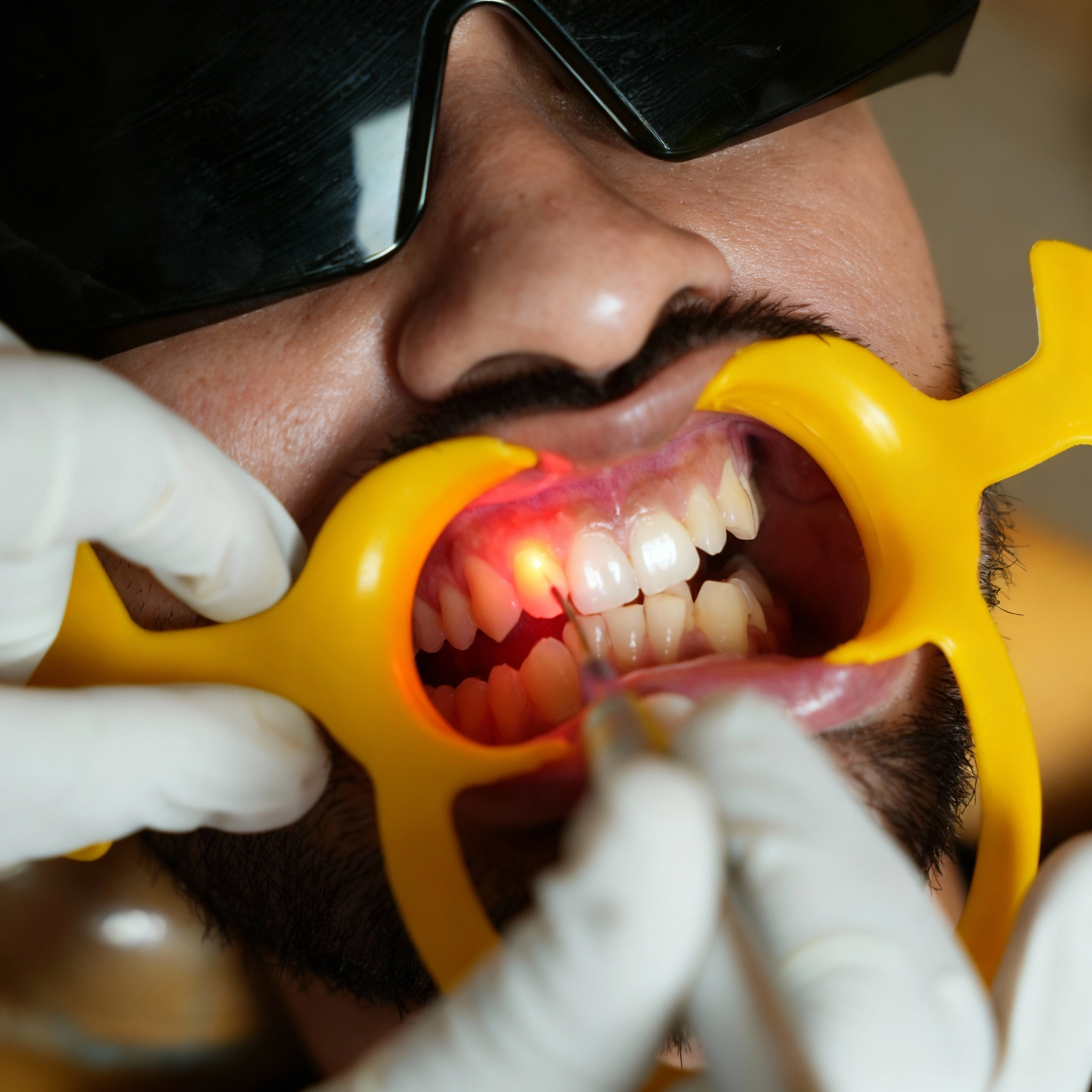
{ "@context": "https://schema.org", "@type": "FAQPage", "mainEntity": [ { "@type": "Question", "name": "What is gum disease and how does it develop?", "acceptedAnswer": { "@type": "Answer", "text": "Gum disease (periodontal disease) is a bacterial infection of the tissues that support and anchor teeth, gums, periodontal ligament, and alveolar bone. It begins as gingivitis (reversible gum inflammation from plaque accumulation) and, if untreated, progresses to periodontitis (irreversible destruction of the supporting bone and connective tissue, ultimately causing tooth loosening and loss)." } }, { "@type": "Question", "name": "What are the stages of gum disease?", "acceptedAnswer": { "@type": "Answer", "text": "Gingivitis is Stage 1, gum inflammation from plaque without bone loss. It is fully reversible with professional cleaning and improved home hygiene. Periodontitis (Stages 1–4) involves progressive, irreversible bone loss graded by severity and extent. Clove Dental's periodontists stage and grade gum disease using the 2017 AAP/EFP classification system based on clinical and radiographic findings." } }, { "@type": "Question", "name": "What are the warning signs of gum disease?", "acceptedAnswer": { "@type": "Answer", "text": "Bleeding gums when brushing or using interdental brushes (the most common and most ignored sign), persistent bad breath despite brushing, red or swollen gum tissue, receding gums with exposed root surfaces, pus between the tooth and gum, loose or drifting teeth, and pain when chewing. Many patients have moderate to severe gum disease with minimal symptoms, only a clinical probing examination reveals the true extent." } }, { "@type": "Question", "name": "What is scaling and root planing (deep cleaning)?", "acceptedAnswer": { "@type": "Answer", "text": "Scaling removes all supragingival (above gum) and subgingival (below gum) bacterial deposits, calculus, and biofilm. Root planing mechanically smooths the tooth root surface to eliminate bacterial endotoxins and create a biologically compatible surface for gum reattachment. Performed under local anaesthesia over 2–4 appointments (one quadrant at a time), it is the cornerstone non-surgical treatment for periodontitis." } }, { "@type": "Question", "name": "Can laser treatment replace surgery for gum disease?", "acceptedAnswer": { "@type": "Answer", "text": "For appropriate cases, where periodontal pockets are moderately deep and the tissue architecture allows, laser therapy is a compelling minimally invasive alternative to conventional flap surgery. Laser energy selectively targets infected tissue, reduces the bacterial load dramatically, and promotes new attachment. Clove Dental's periodontists determine on a case-by-case basis whether laser, non-surgical, or surgical treatment provides the optimal clinical outcome." } }, { "@type": "Question", "name": "Can gum disease be completely reversed?", "acceptedAnswer": { "@type": "Answer", "text": "Gingivitis is completely reversible with professional cleaning and rigorous home hygiene. Periodontitis, once bone loss has occurred, is not reversible; lost bone does not regenerate spontaneously. However, periodontitis is highly controllable. Clove Dental's periodontal maintenance programme (professional cleaning every 3 months) consistently keeps periodontitis in clinical stability, preventing further progression." } }, { "@type": "Question", "name": "What is the connection between gum disease and systemic health?", "acceptedAnswer": { "@type": "Answer", "text": "Extensive peer-reviewed research links periodontitis to increased cardiovascular disease risk, stroke, poorly controlled type 2 diabetes (a bidirectional relationship), adverse pregnancy outcomes (preterm birth, low birth weight), and respiratory conditions. Periodontitis creates a chronic systemic inflammatory burden through bacteraemia. Treating gum disease at Clove Dental is not only a dental decision, it is a systemic health decision." } }, { "@type": "Question", "name": "When does gum disease require surgical treatment?", "acceptedAnswer": { "@type": "Answer", "text": "When residual pockets deeper than 5–6mm persist after thorough non-surgical scaling, or when furcation involvement, bone defects, or gingival deformities prevent adequate home cleaning, surgical intervention is indicated. Periodontal flap surgery improves access for deeper debridement. Bone grafting and guided tissue regeneration (GTR) can partially restore lost bony support in suitable defects." } }, { "@type": "Question", "name": "How is gum disease prevented from returning after treatment?", "acceptedAnswer": { "@type": "Answer", "text": "Periodontal supportive therapy (PST), professional cleaning every 3 months, is the most evidence-based strategy for preventing periodontitis recurrence. At home, daily interdental cleaning (floss or interdental brushes), twice-daily brushing with fluoride toothpaste, and not smoking are equally critical. Clove Dental's periodontists review and reinforce home hygiene technique at every maintenance appointment." } } ] }
Skip to toolbar